In 2024, thousands of websites didn’t lose analytics data because of a bug, a traffic drop, or a Google update.
They lost it because users clicked “Reject all” on cookie banners.
That single click broke dashboards, killed attribution, and made growth teams fly blind.
This is the uncomfortable reality of Google Analytics today. GA4 is powerful, but it comes with growing trade-offs: complex consent mode setups, partial data, legal uncertainty, and a user experience that feels increasingly disconnected from how modern teams actually build and market products.
Developers are tired of bloated scripts and confusing event models. Marketers are frustrated by missing conversions. Indie hackers just want to know if their product is working—without needing a lawyer on standby.
That’s why privacy-first, cookieless analytics tools are gaining serious traction.
Over the past few years, a new generation of analytics platforms has emerged. These tools are built around a simple idea: you can measure what matters without tracking people. No third-party cookies. No personal data. No consent popups.
After reviewing dozens of analytics platforms and helping multiple sites move away from Google Analytics, one thing is clear:
Privacy-first analytics tools now deliver 80–90% of Google Analytics’ core value—with a fraction of the complexity and virtually none of the privacy risk.
In this guide, you’ll find the 9 best privacy-first Google Analytics alternatives—carefully selected for developers, marketers, and indie hackers.
We’ll cover:
- What makes Google Analytics a growing liability
- How cookieless analytics actually work
- Which tools are best for different use cases
- Why tools like Seline are emerging as modern GA replacements—not just simpler alternatives
If you want clean data, faster setups, and fewer compliance headaches, you’re in the right place.
Why Ditch Google Analytics?
Google Analytics isn’t “bad.” But for many teams, it’s becoming increasingly misaligned with reality.
1. Compliance Is Now a Product Problem
GDPR, ePrivacy, and regional data regulations have turned analytics into a legal minefield. Many sites are now required to:
-
Display consent banners
-
Implement Google Consent Mode v2
-
Handle partial or denied tracking
In several EU countries, Google Analytics has already faced legal challenges due to data transfers.
The result? Analytics setups that are harder to maintain—and data you can’t fully trust.
2. Your Data Is Getting Worse
Cookie rejection rates are high. Safari, Firefox, and ad blockers aggressively limit tracking. Even when GA is “working,” it often captures only a subset of real user behavior.
Fewer cookies = fewer sessions = distorted metrics.
3. GA4 Increased Complexity, Not Clarity
GA4 introduced:
-
A steep learning curve
-
Event models that confuse non-technical teams
-
Dashboards that feel disconnected from real business questions
For lean teams, this complexity is overkill.
That’s where privacy-first alternatives shine.
They prioritize:
Aggregate, anonymous data
Clear metrics that map to decisions
Minimal setup and maintenance
The 9 Best Privacy-First Google Analytics Alternatives
1. Seline Analytics
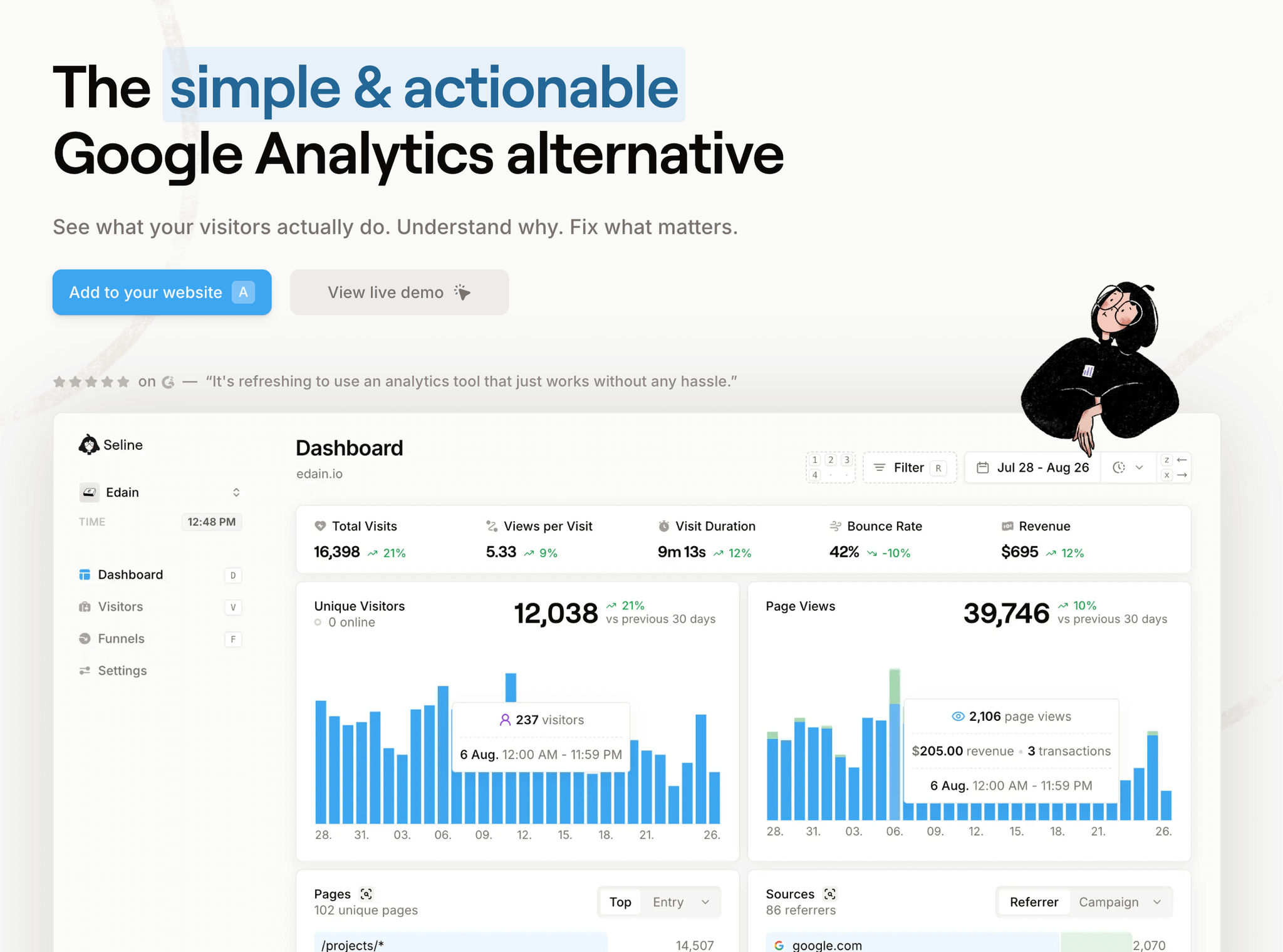
Most privacy-first analytics tools force you to choose between simplicity and insight.
Seline is one of the few that tries to give you both.
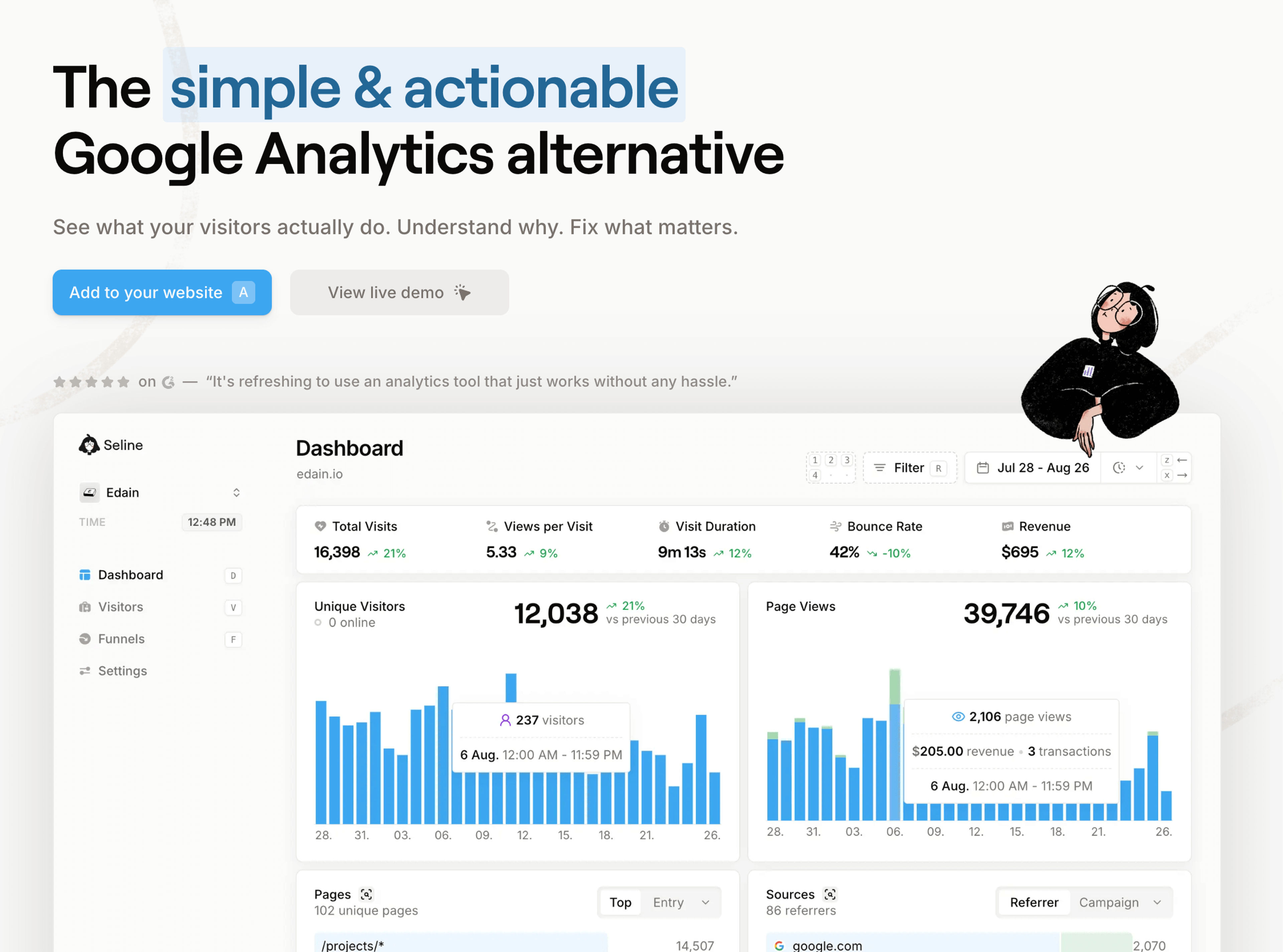
Seline positions itself as a modern Google Analytics alternative—built for a cookieless, privacy-first world, but still powerful enough for serious growth tracking.
Best for: SaaS founders, indie hackers, developers, and marketers who need funnels, events, and conversions without invasive tracking.
Why Seline Stands Out
✅ Cookieless by default
✅ GDPR-ready and EU-hosted
✅ Event tracking, funnels, and conversions
✅ Clean, modern dashboard
✅ No consent banner required
Compared to ultra-lightweight tools like Plausible or Fathom, Seline goes deeper into product and conversion analytics—without crossing into creepy user-level tracking. The dashboard looks great even on mobile—and that alone says a lot about the Seline team's focus on clean aesthetics. It's one of the main reasons I ended up switching from Simple Analytics to Seline. For a direct three-way comparison on pricing and site limits, see Seline vs Simple Analytics vs Plausible.
What You Don’t Get (And That’s a Good Thing)
❌ No cross-site user profiling
❌ No ad network data sharing
❌ No GA-style bloat
Price:
-
Free Plan: Free up to ~3,000 monthly events (no credit card) — great for early projects.
-
Pro Plan: ~$14/month with 25,000 events and advanced features like funnels and proxy subdomain.
Pricing Insight: Seline sits in the lower mid-range of paid options while offering more analytics depth than most basic tools — a strong value for startups and SaaS teams.
2. Plausible Analytics
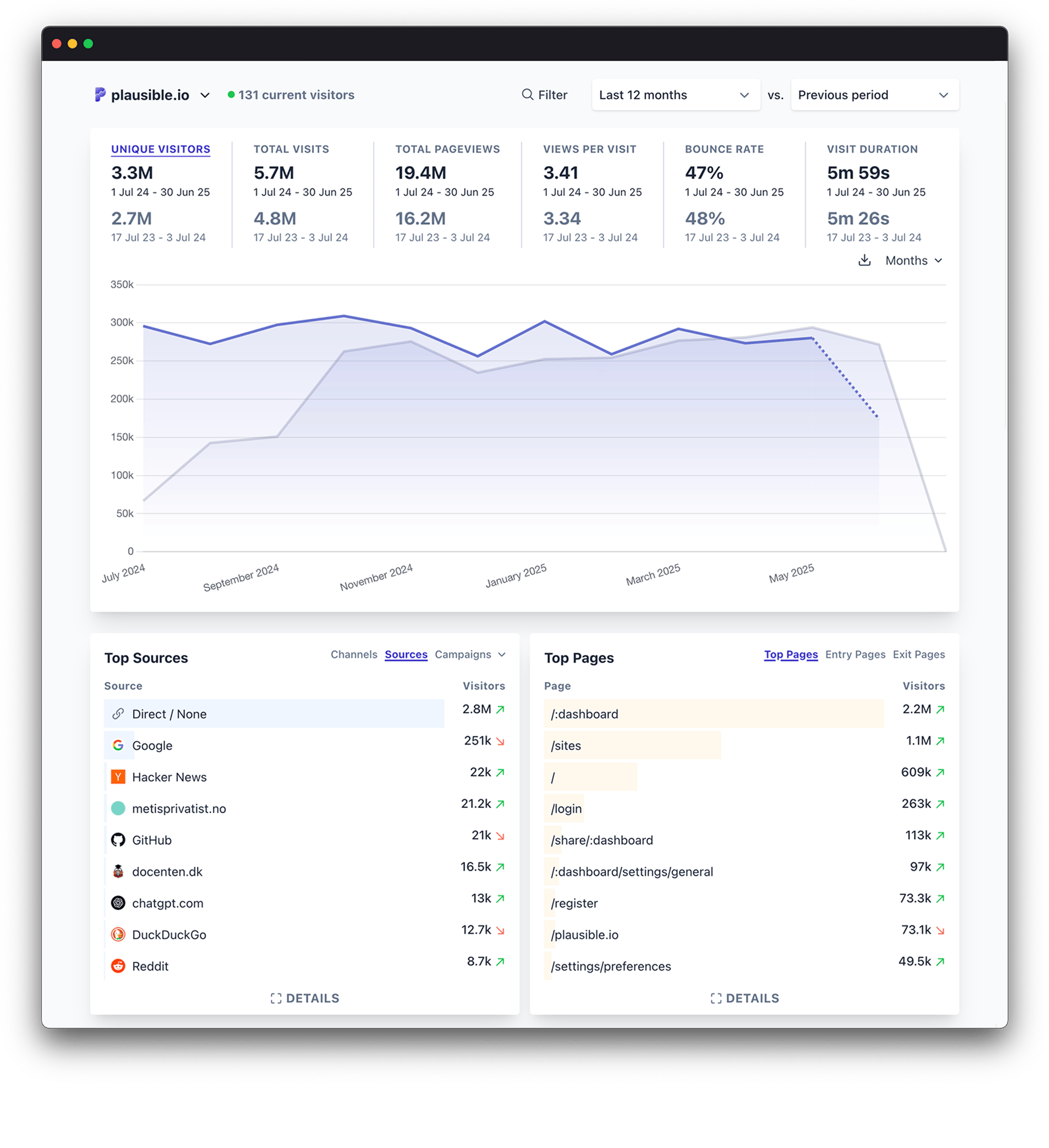
Plausible is often the first tool people discover when looking for a Google Analytics alternative.
It’s lightweight, open-source, and famously easy to use.
Best for: Content sites, blogs, and teams that only need top-level metrics.
Pros:
-
Simple setup
-
Fast-loading script
-
Cheap starter plan
Cons:
-
Limited data retention ~ up to 3 years on cheaper plans
-
Cheapest plan only support 1 site
-
Great for simplicity—but teams focused on conversions may outgrow it quickly.
Price:
-
Plans start from $9/month for ~10,000 pageviews and scale with traffic — e.g., up to ~$14–$19/month for larger sites.
-
Offers optional self-hosting and annual discounts.
Pricing Insight: Plausible is one of the most cost-effective for privacy-first analytics with basic event/goal tracking for a single website.
3. Fathom Analytics
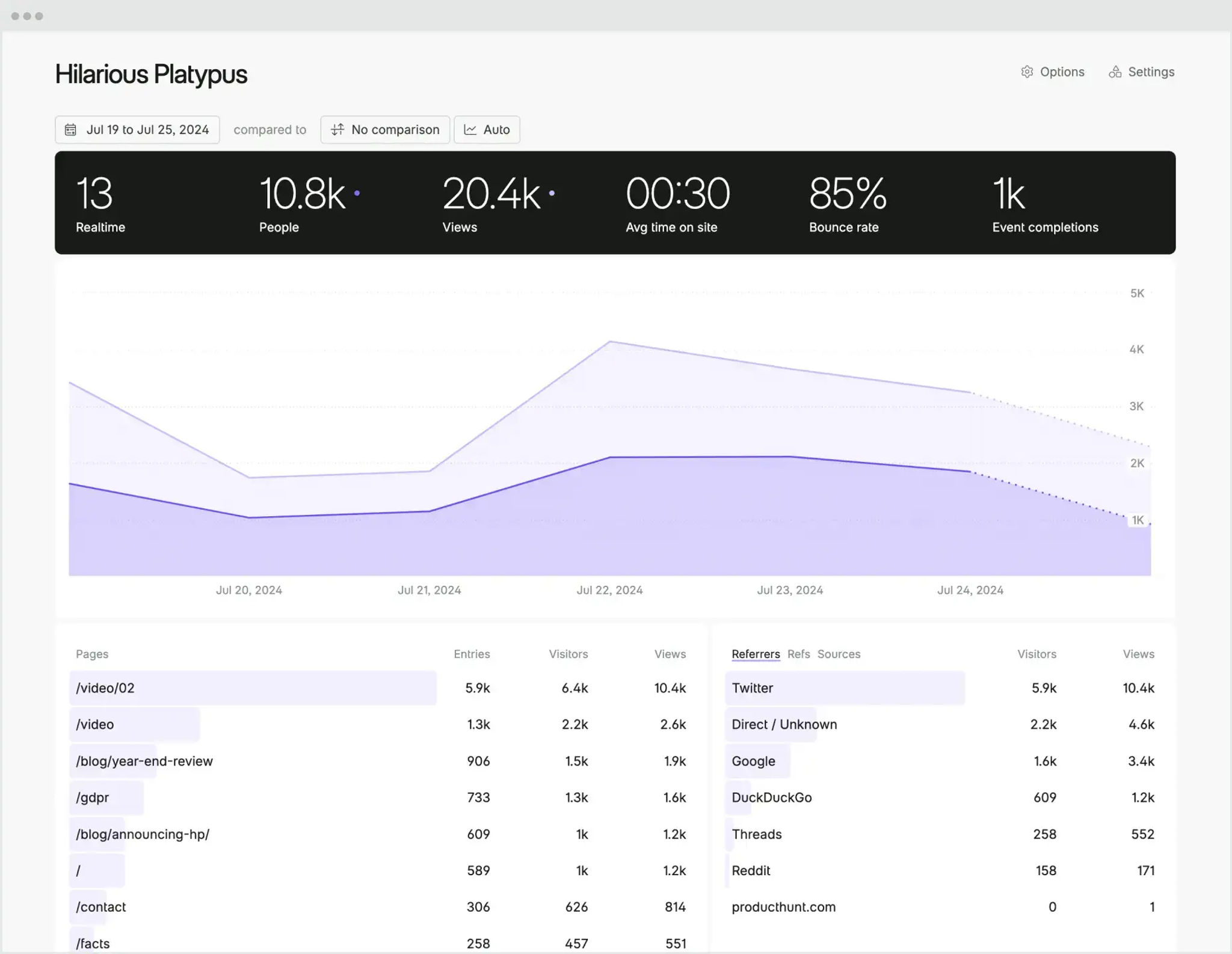
Fathom focuses on speed, privacy, and clarity.
The dashboards are clean, and the metrics are opinionated—by design.
Best for: Marketers who want quick insights without configuration.
Pros:
-
Excellent UX
-
No cookies or consent banners
-
Supports up to 50 sites
-
API access
Cons:
-
Limited customization
-
Less flexible for product analytics
If you only need high-level traffic insights, Fathom is great. For deeper analysis, tools like Seline offer more flexibility.
Price:
Starts at ~$15/month for up to ~100K pageviews and 50 websites included. Price scales for higher traffic, you can see pricing here.
Pricing Insight: Slightly more expensive than Plausible at entry, but includes 50 sites and forever data retention.
4. Simple Analytics
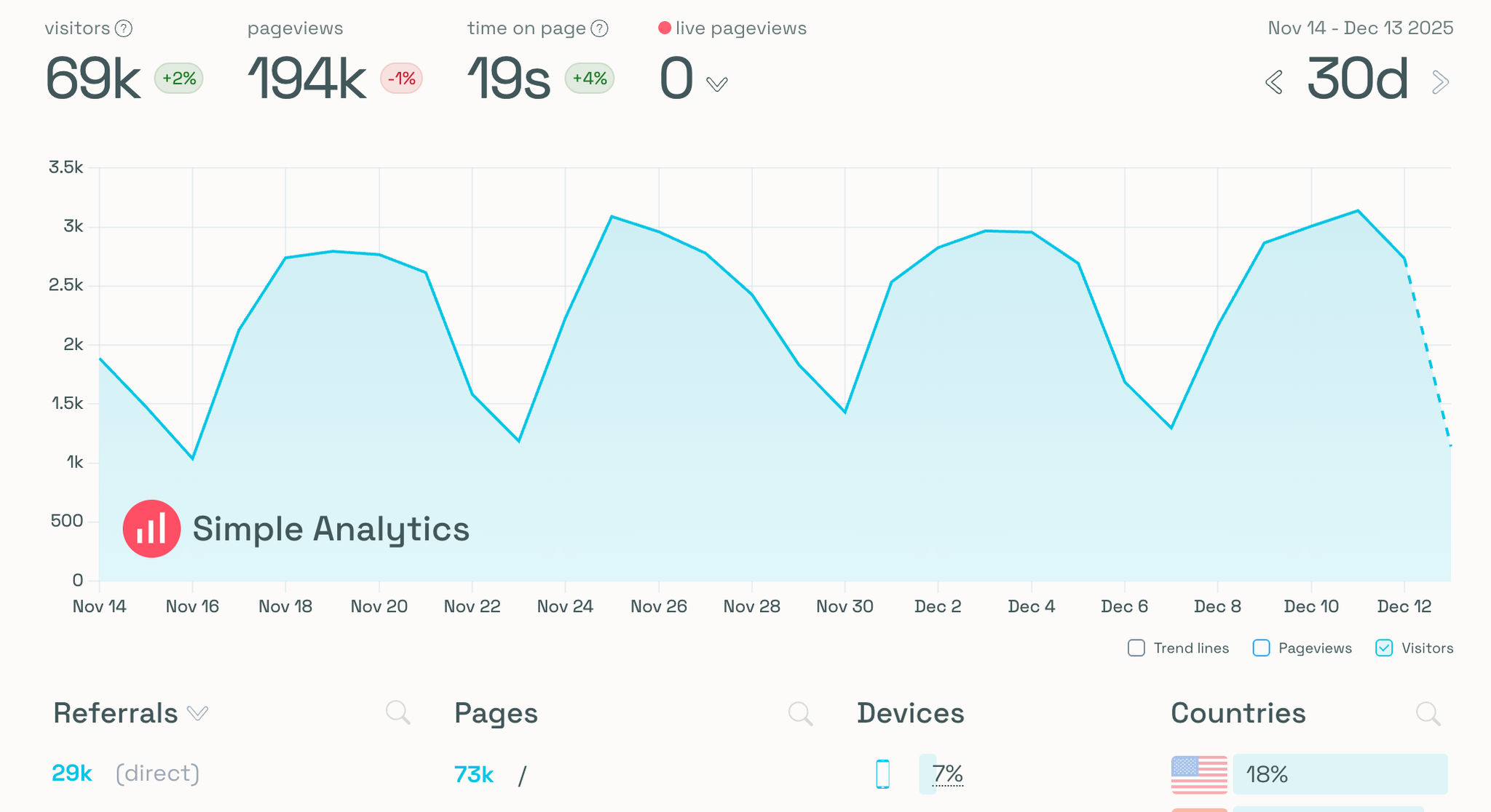
Simple Analytics does exactly what the name promises.
It tracks page views, referrers, and basic events—without collecting personal data.
Best for: Teams prioritizing simplicity and transparency.
Pros:
-
Privacy-first by design
-
Clear pricing
-
Free plan supports up to 5 sites
Cons:
-
Limited advanced features
-
Some features only available on higher-tier plan
-
Cheaper plan only supports 10 websites
Price:
-
Typical starting plan from $15–$19/month (with annual discounts) for 20,000 pageviews.
-
Tiered plans up to ~$60–$120/month depending on number of sites and users.
Pricing Insight: Comparable to Fathom, but often chosen by businesses that prefer simple metrics and a polished, no-noise UI.
5. Umami
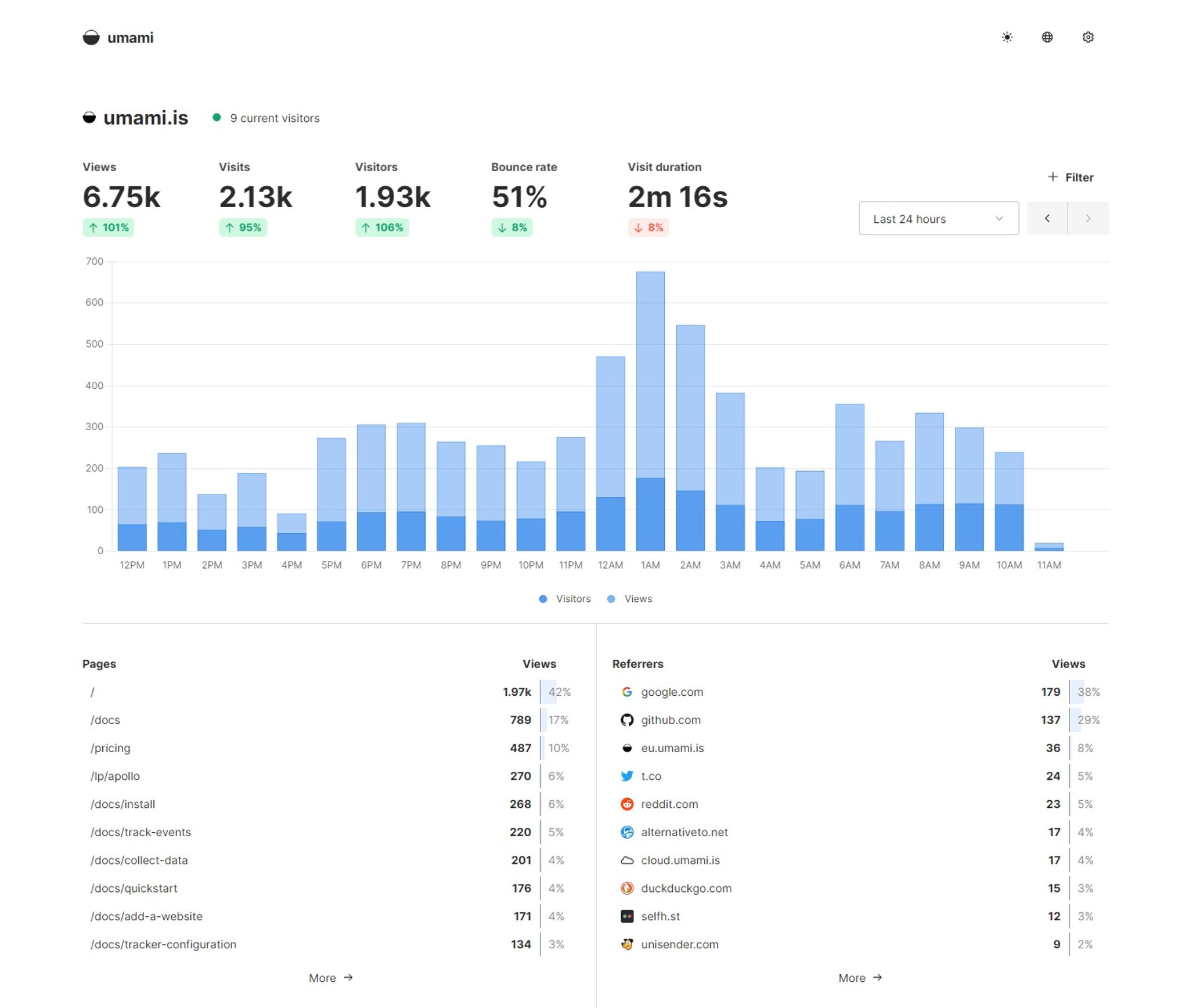
Umami is a popular open-source, self-hosted analytics tool.
It also provided managed solution with generous free plan up to 100,000 monthly events and 3 websites. Do note that it only offer 6 months data retention.
Best for: Developers who want full control and zero SaaS dependency.
Pros:
-
Free if self-hosted
-
Developer-friendly
Cons:
-
Requires maintenance
-
Less polished UI
-
Very short data retention (6 months) for free hobby plan
Price:
-
Self-Hosted: Free if you host it yourself (e.g., on Vercel or Railway).
-
Managed Cloud: Starts for free for up to 100k monthly events or $20/month for 1 million events per month.
Pricing Insight: One of the most budget-friendly, especially if you’re comfortable with self-hosting.
6. GoatCounter
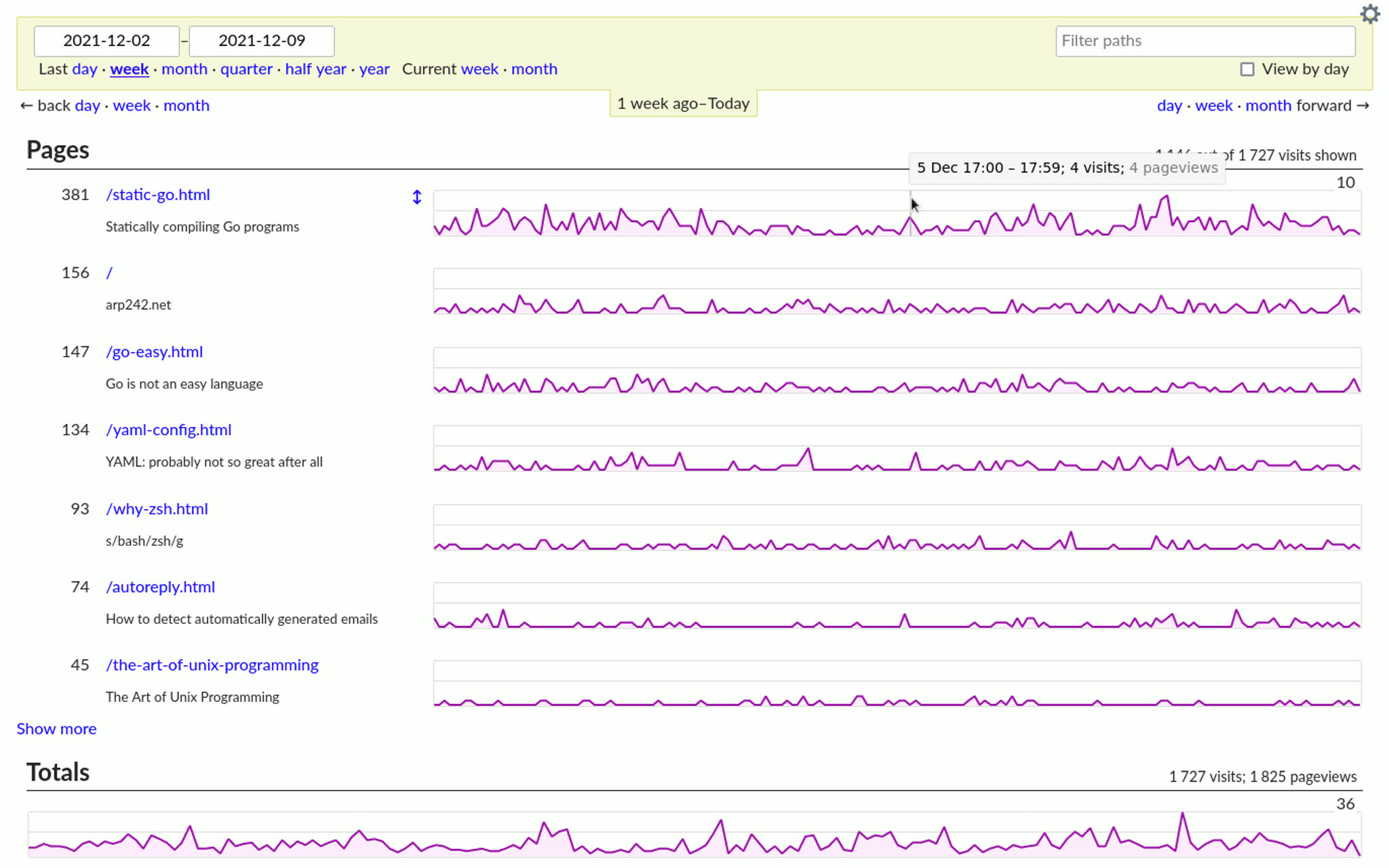
GoatCounter is minimalist open source analytics taken to the extreme.
Best for: Personal sites and small-to-medium businesses with reasonable traffic.
Pros:
-
Extremely lightweight ~3.5KB
-
Privacy-respecting
-
Fully accessible ~ works great with screen readers
Cons:
- Very limited insights
- Outdated UI
Price:
GoatCounter is currently offered for free for reasonable public usage.
Pricing Insight: Best choice when cost is the top priority and only basic metrics are needed.
7. Pirsch Analytics
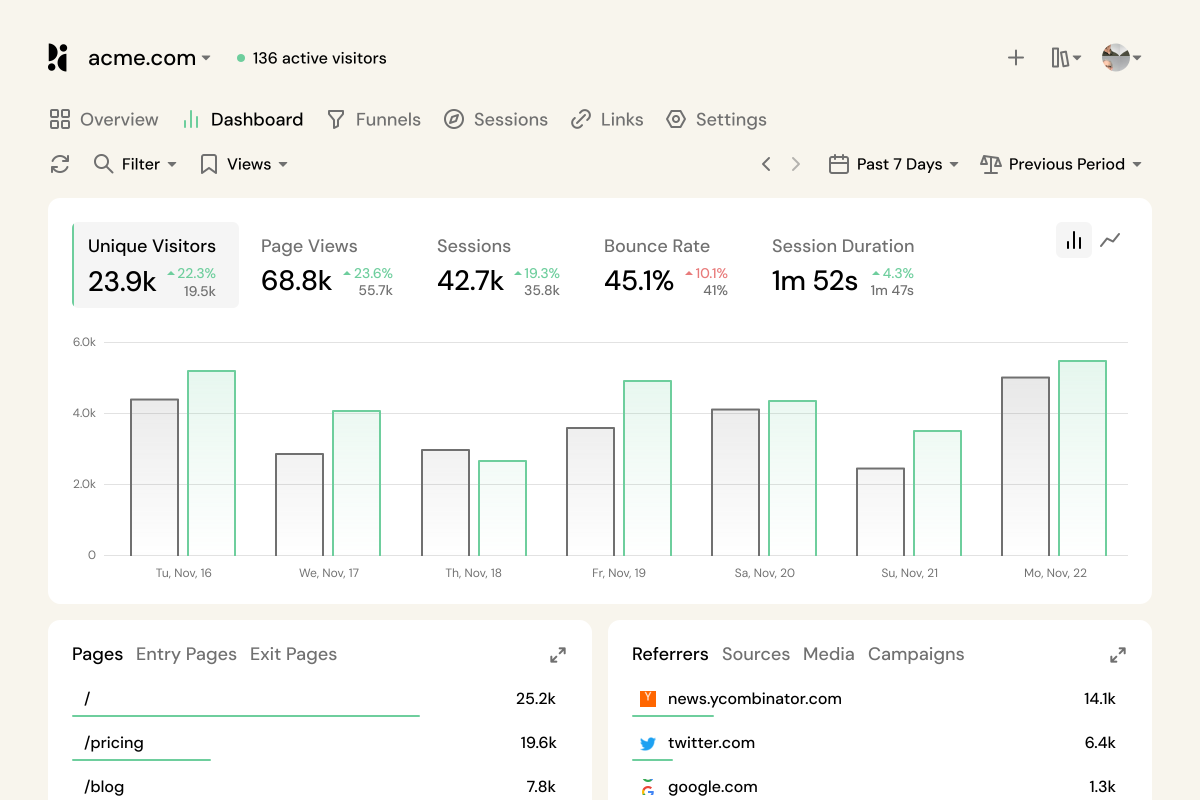
Pirsch is an EU-based analytics platform focused on clean metrics and compliance.
Best for: European businesses prioritizing GDPR clarity.
Pros:
-
Cheapest starting plan at $6/month for up to 50 websites
-
Clean and simple dashboard
-
Easy integration with popular CMSs and frameworks
Cons:
- Smaller ecosystem
Price:
-
Entry Plans: Starting at $6/month for ~10K pageviews.
-
Growth: ~$12/month for ~100K views and advanced features like funnels and A/B testing.
-
Tiered plans scale with traffic volume.
Pricing Insight: Pirsch is a sleeper pick — a rich feature set at lower cost compared to other privacy alternatives.
8. Matomo
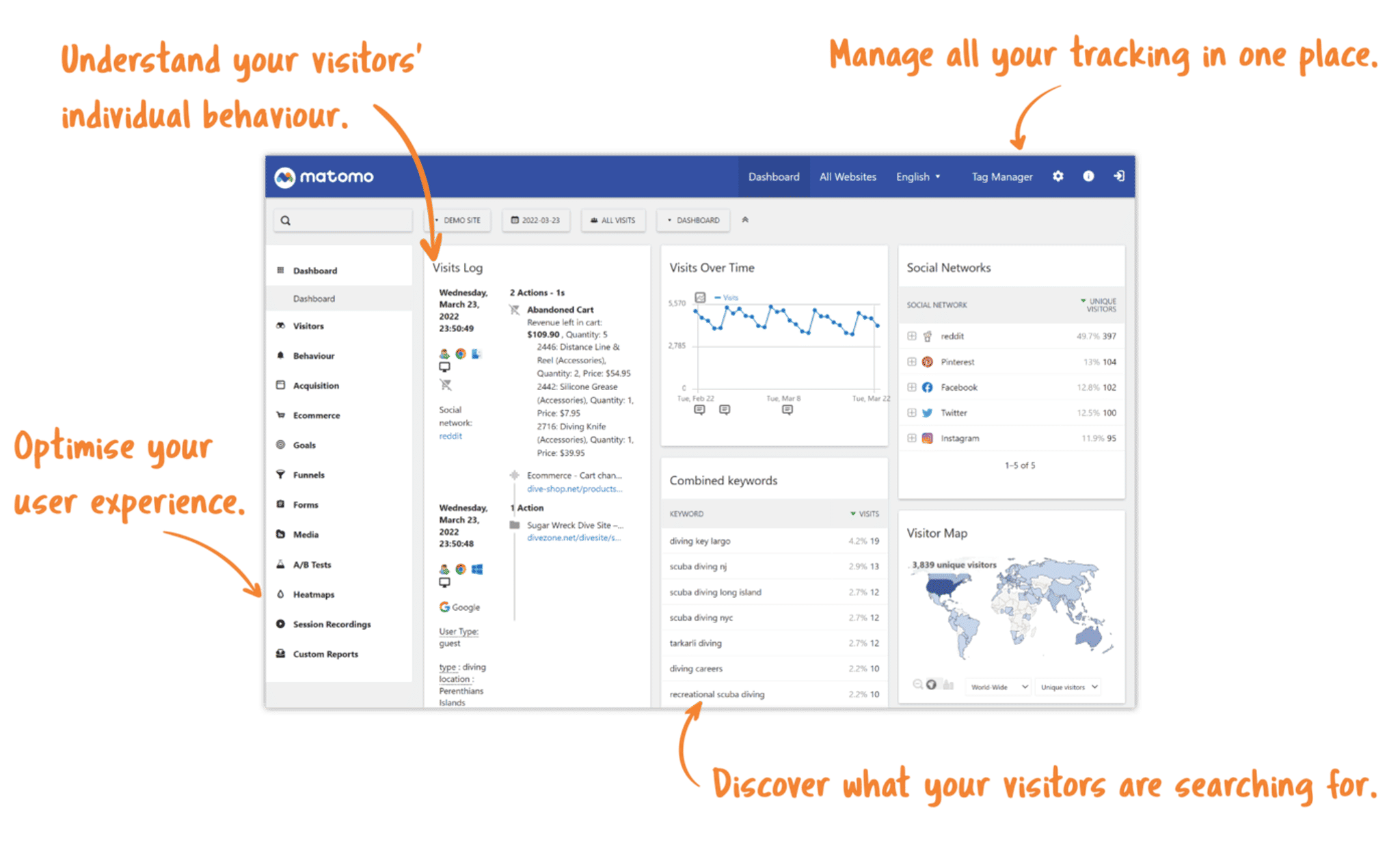
Matomo is the closest thing to a full Google Analytics replacement.
Best for: Enterprises needing full data ownership.
Pros:
-
Self-hosted option
-
Deep feature set
Cons:
-
Complex setup
-
Heavier maintenance
Price:
-
Free Self-Hosted: Open-source, but requires your own server.
-
Cloud Plans: Start ~$23–$29/month for up to 50,000 pageviews and scale with traffic.
Pricing Insight: When you factor hosting and technical setup, the total cost of ownership can exceed most simple analytics platforms.
9. Koko Analytics
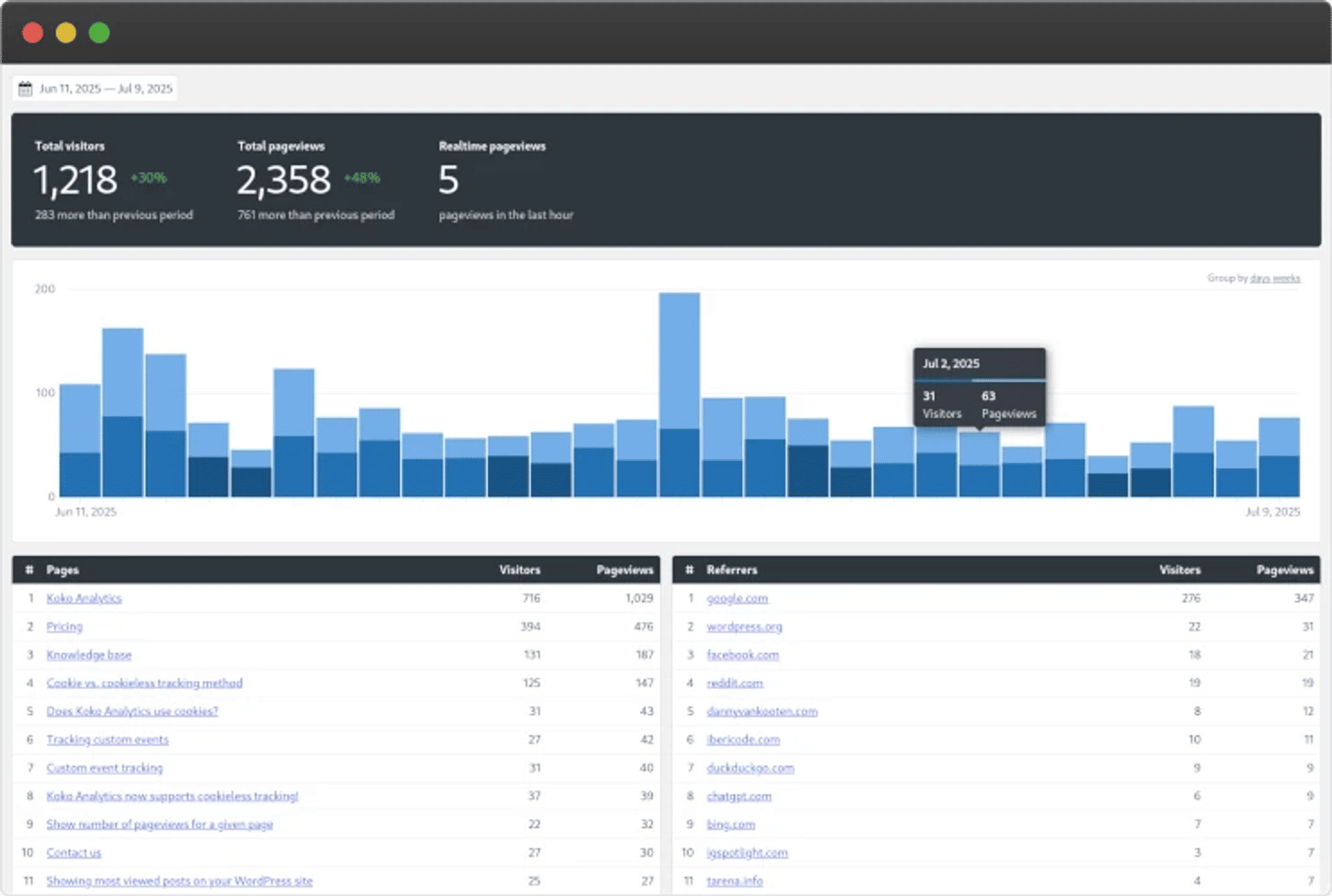
Koko Analytics is a WordPress-native analytics plugin.
Best for: WordPress users who want local, privacy-friendly analytics.
Pros:
-
No external scripts
-
WP-friendly
Cons:
- Limited beyond WordPress
Price:
Koko Analytics provides free plugin with limited features. Price for its Pro plugin starts from $5/month for 1 website or $25/month for unlimited website
Pricing Insight: Best for WordPress sites with modest analytics needs.
Quick Comparison Table
| Tool | Starting Price | Free Option? | Self-Hosted | Unique Strength | Best For |
|---|---|---|---|---|---|
| Seline | Free / $14/mo | ✅ | No | Funnels + events cookieless | SaaS, indie hackers |
| Plausible | $9/mo | ❌ (30-day trial) | Optional | Simple, lightweight | Content & small sites |
| Fathom | $15/mo | ❌ (7-day trial) | No | Clean UX + unlimited sites | Marketers |
| Simple Analytics | from $15/mo | ✅ | No | Transparency | Small biz & marketing |
| Umami | Free / $20/mo | ✅ | ✅ | Developer-controlled | Self-hosting fans |
| GoatCounter | Free | ✅ | No | Ultra minimalist | Personal / open source |
| Pirsch | $6/mo | ❌ (30-day trial) | No | Low cost + rich features | Cost-aware teams |
| Matomo | Free / ~$23/mo | ✅ | ✅ | Full GA parity | Enterprise |
| Koko Analytics | Free / from $5/mo | ✅ | WP Only | WordPress native | WP users |
How to Choose the Right Privacy-First Analytics Tool
Ask yourself three questions:
1. How deep do I need to go?
Page views only → Plausible, Fathom
Funnels and conversions → Seline
2. Do I want to self-host?
3. Who’s using the data?
If You’re Short on Time, Pick This
Best all-around GA alternative: Seline Analytics
Best lightweight analytics: Plausible
Best self-hosted: Umami
Best enterprise control: Matomo
Common Myths About Privacy-First Analytics
“Cookieless analytics aren’t accurate.” They’re often more accurate—because they avoid blocked cookies and partial consent.
“I can’t track conversions.” You can. Tools like Seline support events and funnels without personal data.
“My marketing team will hate it.” Most teams prefer clearer dashboards over GA’s complexity.
Conclusion
Google Analytics isn’t going away—but for many teams, it’s no longer the best default.
Privacy-first analytics tools are faster to set up, easier to maintain, and better aligned with modern expectations around data and trust.
If you want a simple tool, you have options.
If you want real insight without privacy drama, Seline is one of the best places to start.
Install one tool today. You can always switch later—but staying blind costs more than switching ever will.